Charging · Costs
What does it cost to charge an EV?
The answer depends mostly on where you charge. Home charging on the right tariff can be very affordable; public fast charging costs more for the convenience and speed.
The basic calculation
Cost to charge = energy added (kWh) × price per kWh. Some energy is lost as heat while charging, so the amount drawn from the wall is a little more than what ends up in the battery.
To estimate cost per kilometre, you need your car's consumption. Many passenger EVs use roughly 14 to 20 kWh per 100 km, depending on the model, speed, weather and load. As an illustration only: a car using 16 kWh per 100 km, charged at a tariff of 30 cents per kWh, would cost about $4.80 per 100 km before losses. Use your own tariff and your car's real consumption.
Home charging
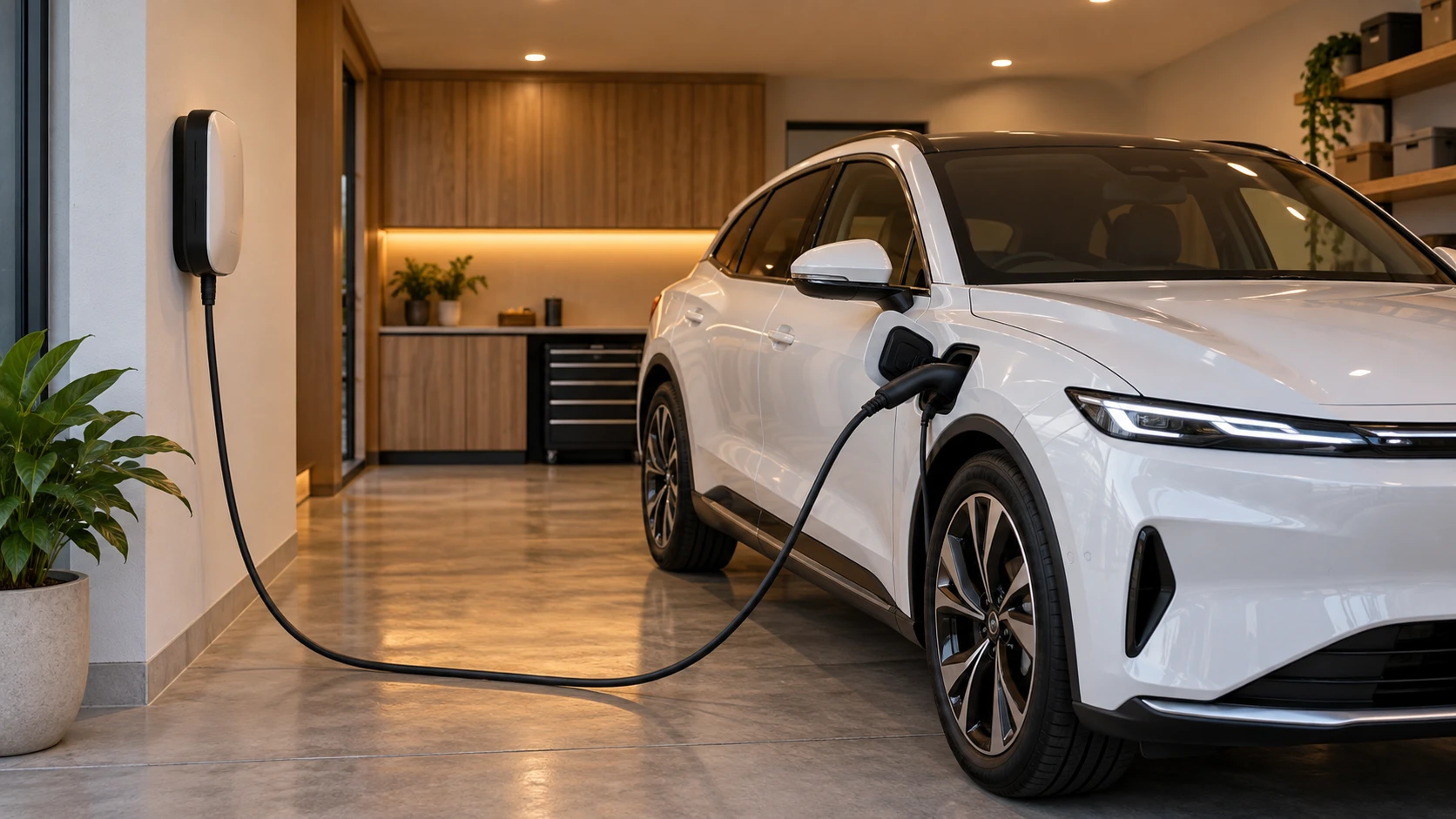
Home charging cost depends on your electricity tariff. Charging overnight on an off-peak, time-of-use or EV-specific tariff, or during the day from rooftop solar, can be much cheaper than a flat peak rate.
Check your bill or your retailer's app for your rates and the times they apply, and use your car's or wallbox's scheduled charging to target the cheapest window.
Public AC charging
Public AC chargers at shopping centres, hotels and car parks are slower, and pricing varies widely: some are free for customers, some charge per kWh, and some charge per hour. Parking fees may apply separately.
DC fast charging
DC fast charging is usually the most expensive way to charge per kWh, because you're paying for speed and for costly equipment. It's typically priced per kWh, sometimes with per-minute or idle fees, and some networks offer memberships or vary prices by time of day.
Prices change, so check the network's app for current pricing before you plug in.
Ways to keep costs down
- Do most of your charging at home, on the cheapest tariff window.
- Line up daytime charging with rooftop solar if you have it.
- Use public AC or destination charging when you're parked anyway.
- On trips, charge to what you need rather than 100%: the last 20% is slow and can attract idle or time-based fees.
Ask Evie
Still have a question?
Evie is Indigo's AI assistant for electric and hybrid vehicles. Ask in your own words, for example:
“Roughly what would it cost me to charge at home on my tariff?”