Charging · Types
Charger types, speeds and connectors
From a standard power point to an ultra-fast DC charger: what each type delivers, which plug you need, and why your car sets the real limit.
Connectors used in Australia
Type 2 (AC)
The standard AC connector on EVs sold in Australia, used for home wallboxes and public AC charging.
CCS2 / Combo 2 (DC)
The standard DC fast-charging connector on new EVs sold in Australia. It combines the Type 2 shape with two extra DC pins below.
CHAdeMO (DC)
A legacy DC standard found on some older EVs, such as earlier Nissan Leaf models. Fewer new chargers include it.
Tesla in Australia
Tesla vehicles and Superchargers in Australia use Type 2 and CCS2, so there's no separate Tesla plug here.
Portable charger (standard power point)
Most EVs come with, or offer, a portable charger that plugs into a standard household outlet. It typically delivers around 2 kW, which adds a modest amount of range overnight. It's handy as a backup or for low daily driving, but slow for regular use.
Use a dedicated, good-quality outlet in sound condition, and avoid extension leads unless the manufacturer specifically allows them.
AC wallbox (home and destination)
A wallbox installed by a licensed electrician is the usual home setup. On a typical single-phase home supply it delivers up to about 7 kW. Properties with three-phase power can support up to 22 kW AC, but most cars accept only around 7 to 11 kW on AC, so your car's onboard charger sets the real limit.
Public AC chargers work the same way. Many are untethered, meaning you bring your own Type 2 cable.
DC fast charging
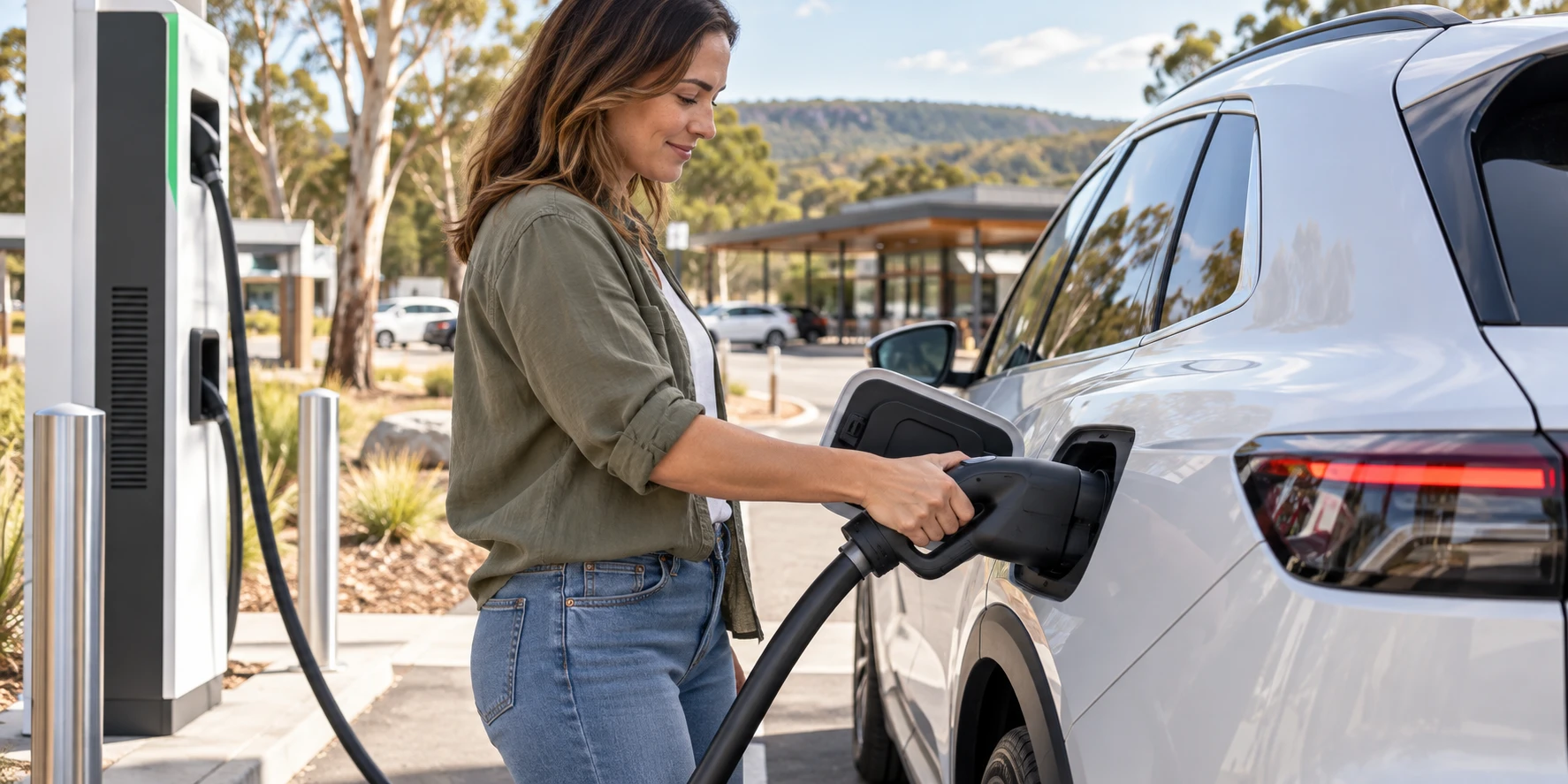
DC fast chargers commonly range from 50 kW to 350 kW. The car only draws what its battery can accept, which depends on the model, the battery's temperature and its state of charge; charging slows as the battery fills.
A higher-rated charger only helps if your car can take advantage of it. Your car's maximum DC charging rate is usually listed in its specifications.
Tethered and untethered
A tethered charger has its own cable attached. An untethered charger has only a socket, so you need your own cable. DC fast chargers are always tethered; public AC chargers are often untethered, so it's worth keeping a Type 2 cable in the car.
Ask Evie
Still have a question?
Evie is Indigo's AI assistant for electric and hybrid vehicles. Ask in your own words, for example:
“What's the fastest my car can charge, and which chargers suit it?”