Charging · Networks
Australia's public charging networks
Public charging in Australia is run by a mix of car makers, motoring clubs, fuel and energy companies, and government-backed programs. Here's how they work and what to expect.
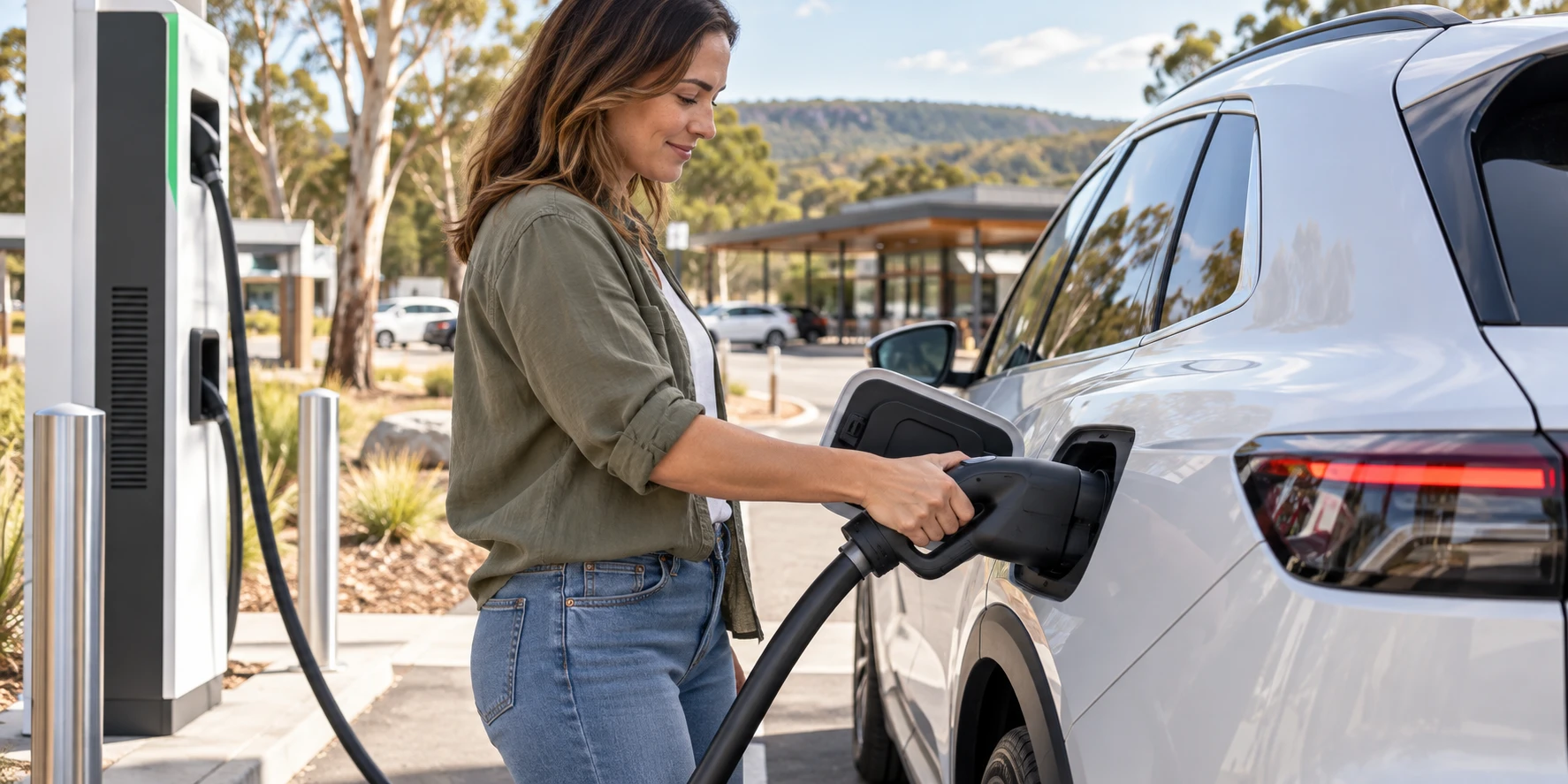
Networks you'll come across
Coverage, pricing and access change regularly. Check each network's own app or website for current sites and rates.
Tesla Supercharger
Tesla's DC fast-charging network. In Australia it uses CCS2 connectors, and many sites are open to non-Tesla EVs through the Tesla app; the app shows which sites and pricing apply.
Chargefox
A large Australian network covering fast and ultra-fast DC sites, plus AC chargers. Sessions are typically started through the Chargefox app or an RFID card.
Evie Networks
An Australian fast and ultra-fast DC network with sites along highways and at destinations. Not to be confused with Evie, Indigo's AI assistant.
NRMA
The motoring club operates a charging network, with a focus on regional New South Wales and the ACT.
Ampol AmpCharge
DC fast chargers at selected Ampol service stations, alongside the usual fuel-station amenities.
BP Pulse
BP's EV charging brand, with chargers at selected BP sites.
Jolt
Kerbside chargers, often in metropolitan areas, designed for top-ups while you're out.
State and highway programs
Some states have backed highway charging, such as Queensland's Electric Super Highway, and councils often run local destination chargers.
Starting a charging session
Most networks ask you to start a session through their app, an RFID card linked to your account, or, at some newer sites, a contactless bank card at the charger. Setting up accounts before a long trip saves time at the charger.
Some vehicles support 'plug and charge' on certain networks, where the car identifies itself and billing happens automatically. Support varies by brand and network.
How pricing usually works
Public DC fast charging is usually priced per kWh, though some networks also charge per minute, add idle fees if you stay plugged in after charging finishes, or offer memberships with lower rates. Prices can vary by site and time of day.
Check the price in the network's app before you plug in. See our charging costs guide for how public and home charging compare.
Reliability and etiquette
A few habits that make public charging better for everyone:
- Move your car once you've finished charging.
- At busy fast chargers, charge to what you need (often around 80%) rather than 100%.
- Report faulty chargers through the network's app so they can be fixed.
- Don't park in a charging bay if you're not charging.
Ask Evie
Still have a question?
Evie is Indigo's AI assistant for electric and hybrid vehicles. Ask in your own words, for example:
“Which charging network apps should I set up before a trip from Brisbane to Sydney?”